























![Juniors Tad Lambert and Lily Reiff watch swim footage Jan. 19 in Room 153. Lambert and Reiff were editing their swim recap for Cougar Roundup. “[KUGR] is such a great environment for creativity but also to form amazing friends,” Lambert said. “KUGR has become like a home for me and I feel like I’ve gotten super close with so many other members.”](https://smnw.com/wp-content/uploads/2023/01/ejohnson_KUGR_7-900x600.jpg)


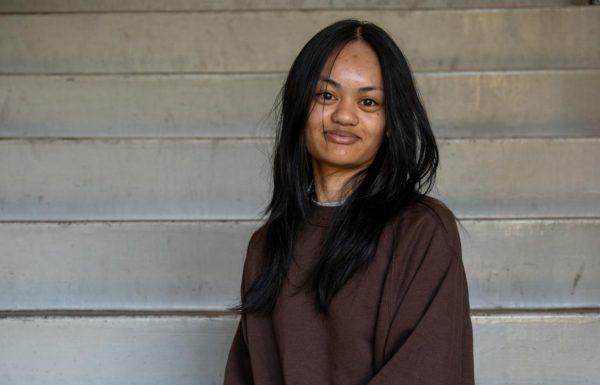
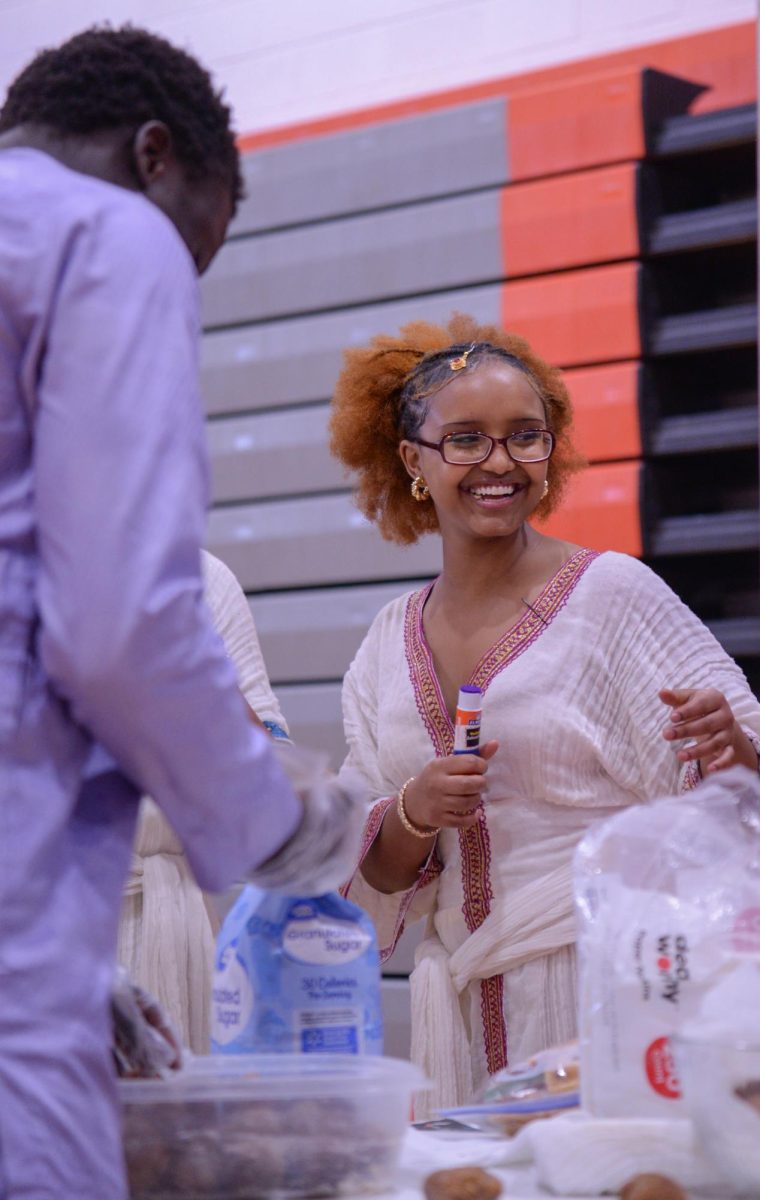
In third or fourth grade, Sara Tewelde, seven years old, comes home from school to tons of people crammed into her tiny home in Ethiopia, partying and celebrating.
They’d finally gotten their papers, her mother tells her. America was chosen as their destination. Wichita, KS, to be precise, but all that sticks is America. Their flight is set to the next few days.
10 years later, now a senior, Tewelde has moved four times. Eritrea to Ethiopia, to America: first Wichita, then KCK, then Shawnee.
They first moved when Tewelde was two, from Eritrea, where she was born, to Ethiopia. They weren’t in a safe area – armed conflict lingered after the war between Eritrea and Ethiopia that resulted in Eritrea’s independence.
It was a little safer in Ethiopia. But they still lived in perpetual fear – her mom shielded her from what stress she could, but radio, news and townspeak provided updates on the fighting, and it remained a looming danger. Tewelde’s father was first called to the military as she and her mother moved to Ethiopia, then opted to move to Angola instead of joining them, deterred by the five-year waiting period they were given for the process of seeking refuge. Tewelde and her mother waited the five years.
Relatives and friends made tons of cultural food to celebrate over the days following the announcement that they’d leave for America. She was tearfully leaving cousins, family. America seemed almost a mythical prospect, a golden country.
“Back there they talk about it as if the streets were made of gold,” Tewelde says. “I expected a big house, and a bunch of dolls, because I was, like, seven.”
Five years and thousands of dollars into the excruciatingly long process of getting documents, verifications, during which Tewelde translated for her mother into Tigrinya, using her own limited English knowledge – they were on their way to America. Tewelde remembers the day of the flight: buying new clothes, putting them on, then taking a little van to the airport. The flight felt two days long. It was her first time on an airplane.
“The air felt so different,” Tewelde said. “Landing here was like, ‘oh my gosh, I’m seeing people I’ve never seen, people I’ve only seen in movies.’”
The Wichita hotel they slept at that night had free breakfast. She had eggs, and her first ever apple.
They moved to KCK after a year, where she finished the rest of elementary and middle school. Schooling here was different than it was in Ethiopia. Tewelde said it was more lenient.
Teachers pulled her out of class and supported her in one-on-one sessions, since she didn’t know much English – she remembers initially only knowing greetings, hi, hello.
“The hardest part for me, I would say, was the language barrier,” Tewelde said. “Because when I came here, I knew little to nothing in English. So when I came here, you’re expected to know all this stuff, and I’m like, oh, guys…how to say hi, hello?”
By middle school she was operating on her own. She grew comfortable, found a circle of friends that she’d known through elementary school to go to J.C. Harmon high school with.
She was able to spend four days at Harmon before they had to move again.
Shawnee. It was closer to her mom’s work, and her mom wanted her to go to Northwest, with all its opportunities.
“I was gonna go to Harmon with my friends,” Tewelde said. “I was like, bro, I’m not gonna have no friends there. Everyone has their little group already.”
She was starting anew again.
“It was always hard when I got told I was going to move, because it’s like, ‘oh my gosh, I’m leaving the only thing I know,’” Tewelde said. “These are my people. And then it’s time to leave those people, and I’m like, ‘oh no, I don’t want to do that.’ Then you come to the new site, and it’s like, ‘I found my people again.’ And then it’s like, ‘oh, gosh, I gotta leave them now, too.’”
The constant change has had many ripple effects in her life.
She’s started to forget the Amharic she spoke in Ethiopia, though her Tigrinya has stayed constant.
“I’m always speaking Tigrinya, because that’s where we’re from,” Tewelde said. “So, I feel like Tigrinya is always going to be with me, low-key.”
She’s become more mindful of the opportunities she’s been granted at NW.
“They don’t have as much resources,” Tewelde said, referring to the schools back in Ethiopia. “But they use them. I feel like here we have so many resources that we don’t use, and they have so little, but they use them.”
She reunited with her father, who was finally able to join them in the U.S. after he and her mother had to marry, again, to fulfill the process started by her mother to bring him over.
She’s gotten her CNA license through NW’s program, which she couldn’t have done at Harmon, and wants to go on to Wichita State.
And she’s learned to be grateful for what she has.