






![Juniors Tad Lambert and Lily Reiff watch swim footage Jan. 19 in Room 153. Lambert and Reiff were editing their swim recap for Cougar Roundup. “[KUGR] is such a great environment for creativity but also to form amazing friends,” Lambert said. “KUGR has become like a home for me and I feel like I’ve gotten super close with so many other members.”](https://smnw.com/wp-content/uploads/2023/01/ejohnson_KUGR_7-900x600.jpg)


I smoothed down my short-sleeve orange and blue plaid button-up (I know…what a look), and pulled on my aggressively small khaki cargo shorts. I wanted to look presentable. Like I was trying, but in a casual way. Like I was still a teenager…one who really cared.
I walked up the steep, wet stone steps leading to the Ensley’s front door. As I carefully knocked and breathed deeply, my ribs constricted against plastic buttons and tight seams. I contemplated walking back down the hill to my dad’s Prius.
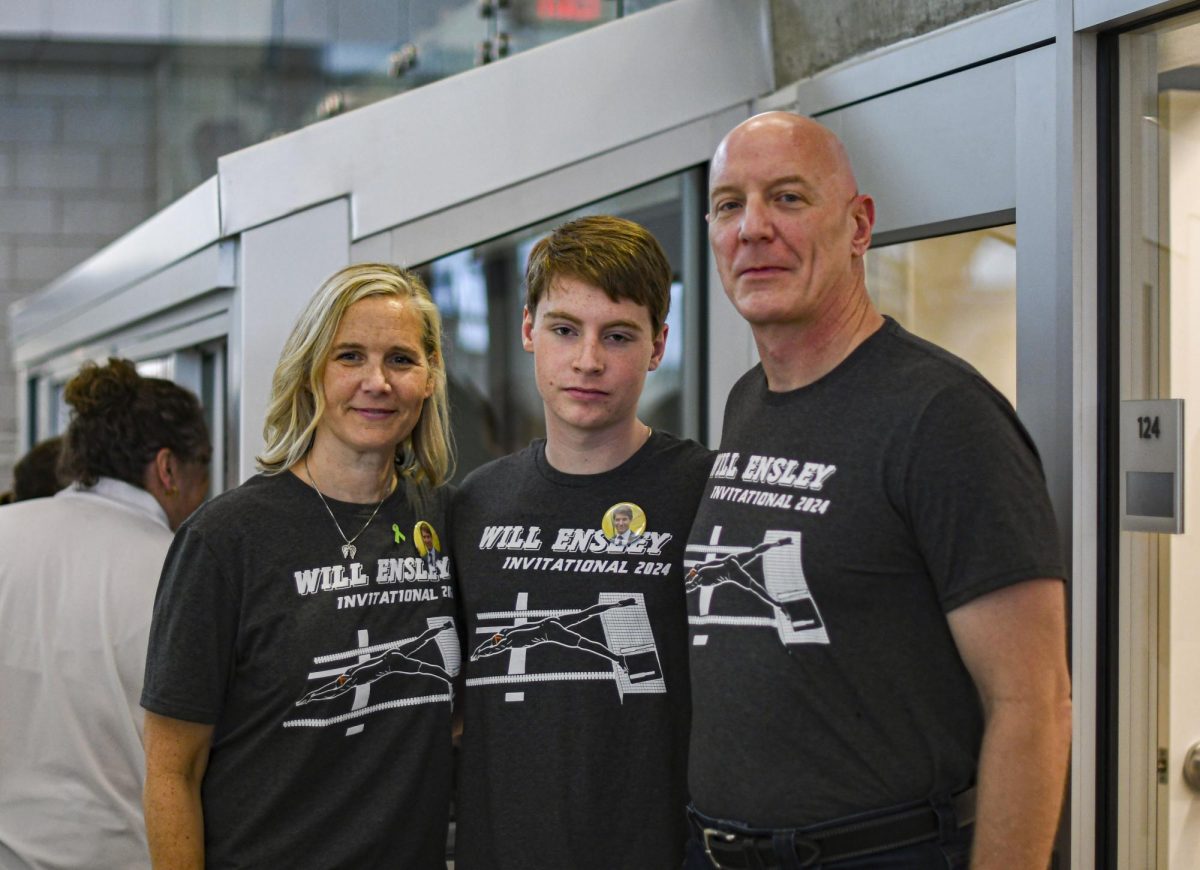
This was the home of a student who died. Will Ensley was crushed in a car accident the summer before my sophomore year. I had attended his funeral and found commemorative posts from his friends on Instagram. But this was different.
Now, I was actually at their front door, knocking, waiting for his parents to answer.
Seconds later, Sharon Ensley did and smiled at me with squinted eyes.
I had no idea what to do. This was one of my first interviews that wasn’t at school, or related to school — at least, not in the ways my other stories were. I remember my freshman year, nearly shaking at the thought of grabbing a senior golfer who won Athlete of the Month from her fourth hour class for five minutes. Now, I was walking into the house of two parents who lost their son, Will, in a nine-car pileup weeks before.
I wrote a news brief about Will’s accident for immediate online coverage, and an obituary for our first print issue. But to me, that wasn’t enough. Will was captain of the varsity boys swim team. He was a straight-A student. But he was also someone’s boyfriend. Best friend. Son. I wanted people to know who he was beyond athletic or academic accomplishments. It felt like the opportunity of telling his story fell squarely on my shoulders.
I was ushered into their living room and noticed the mounds of cards and peace lilies sitting on a dark table near their front door. I started by telling them what my intentions were: to make sure that people knew who their son was, beyond news articles that depict chilling details of the accident. Or vague, but sweet, compliments in obituaries.
It felt awkward even asking them to record. I was critically analyzing my every movement, phrasing and inflection, scanning for any minor signs of disrespect or insensitivity.
I wanted to lean over and grab their hands. Sharon and Randall were sitting on opposite sides of the brown couch. Narrow boxes of tissues were planted on each in-table. But I squirmed in my seat and looked down at my MacBook.
I stood in Will’s bedroom and felt the stillness of his grandfather’s watch on his nightstand — the one he wore to school dances.
I looked into the kitchen and thought about where he might’ve eaten his chicken and rice before swim meets, like he always did. I passed his older brother, who’s at college,’s bedroom and wondered if he was sobbing in a dorm right now.
For weeks, I talked with his parents, girlfriend, best friends and swim coach.
It felt like I was making people cry in these interviews. Like I was probing them with inappropriate questions about the death of their loved one. Like I was being selfish and all they needed was space, not some girl with a reporter’s notebook strolling through their house.
I cried at the pea green desk in my bedroom thinking about how to articulate that Will’s girlfriend keeps a blue and red sweatshirt she got for him in Arizona in sealed plastic bags. It was to protect the smell, she said.
Or how, since Will’s funeral, one of his best friends still looks for him in the driver’s seat of every white pick-up truck he passes.
Since writing that feature, I’ve documented the rise of gun violence amongst adolescents in Kansas City, a senior in recovery who wondered whether her cancer would come back, students who had stopped coming to school for fear of being pulled over and then sent to countries they didn’t know, or no longer recognized, and more.
But I think about Will’s story most often. It was the first time that I felt what kind of power, empathy and responsibility it took to be a journalist. And why publishing these stories was so important. Or realized that I could change what people think about. Or who they think about.
Sometimes being a student reporter meant taking photos of the homecoming parade. Other times, it meant attending class after a funeral. I’ve gotten an equal amount of hugs for the work I’ve done as I have angry emails.
But looking back, I wouldn’t trade it for anything.
I wish my articles didn’t have a word count. Because there’s still so much I’ve wanted to say, regardless of whether people actually read it or not.
But this is my last byline.
So, thank you, readers, for paying attention, for not just letting me be a publicist for NW, but an actual journalist, who takes risks, unveils controversies, and most importantly, tells your stories.
Thank you for everything.