
*The student names in this story have been changed to protect their identities.
Senior *Josie Milner stares intently at her popcorn ceiling. She watches the bumps cast familiar shadows and weave intricate patterns as she pulls her baby pink comforter up to her neck and slowly closes her eyes.
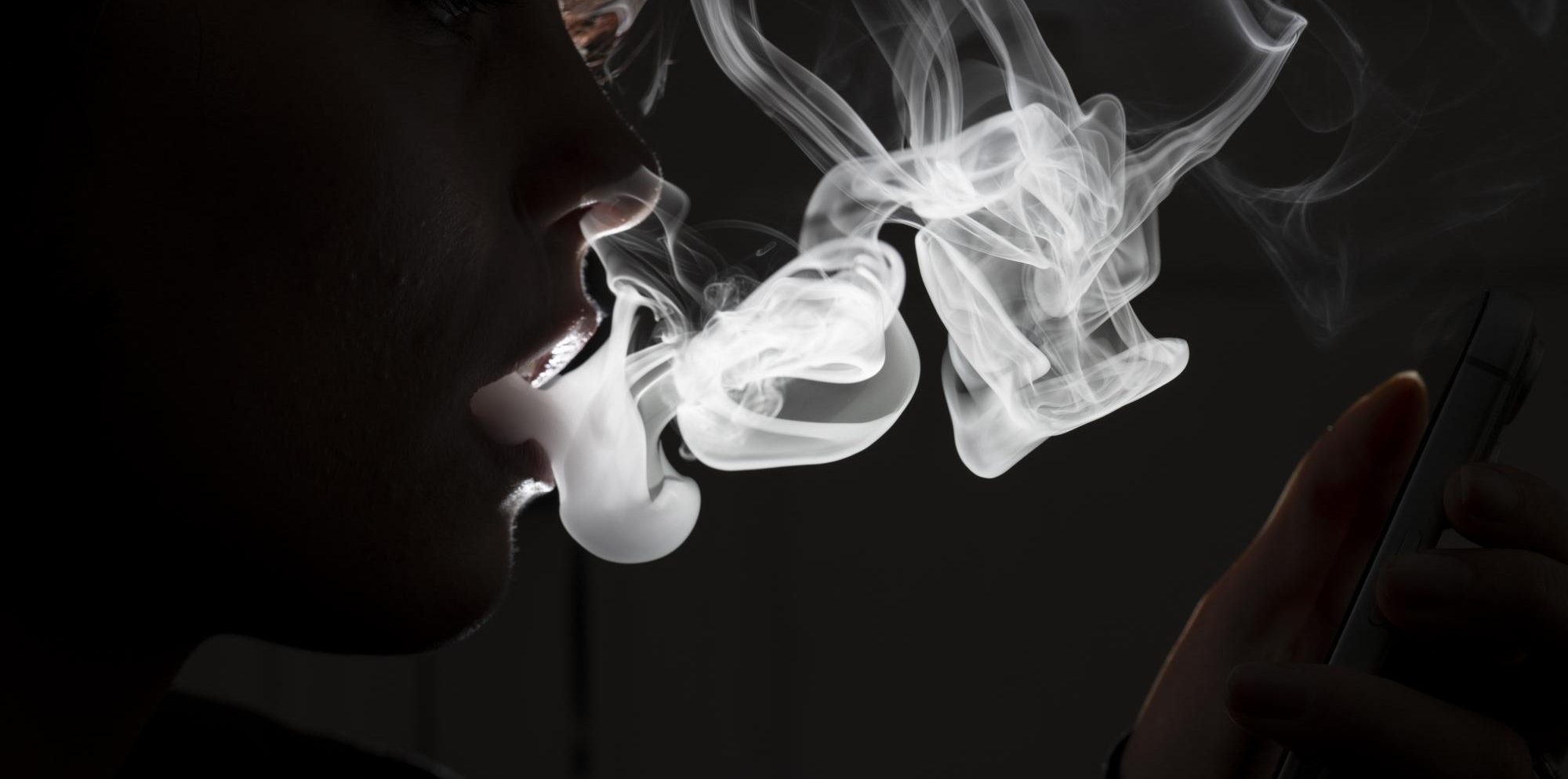
A few minutes before, she took five long hits of her cart — an electronic smoking device with pre-filled cannabis oil. She inhaled the peach-flavored vapor and held still before blowing back out. As the candy scented smoke dissipated in her bedroom, she was no longer reminded of English readings, government notes or logging NHS volunteer hours.
“Space Song” by Beach House streams through her AirPods.
“I feel unconscious,” Milner said. “Like the music is flowing through my brain.”
According to the American Journal of Public Health, cannabis remains the most commonly used illicit drug in the United States, with its use increasing due to legalization, decriminalization and expanded access.
Addiction specialists say the effects of cannabis are still widely unknown, especially on teenagers, because of federally imposed limitations on research. Teenagers also say that a lack of public health messaging, combined with pervasive cannabis advertisements on social media, has reinforced misconceptions around the drug and promoted its usage.
According to the 2024 National Youth Tobacco Survey and a long-running study conducted by the University of Michigan, there have been significant declines in vaping and alcohol consumption among teenagers.
But cannabis trends are going in the opposite direction. In fact, a study published in the JAMA Health Forum, an international, peer-reviewed health journal, shows that marijuana use among adolescents has increased by approximately 26% since 2017.
There’s no clear explanation for the discrepancies, though some believe that the drop in drinking may be linked to COVID reducing larger social gatherings, while declining vaping rates followed high-profile lawsuits against companies like JUUL for marketing tactics — such as fruity flavors and colorful packaging — that targeted adolescents.
These trends reflect the student body at Northwest.
In an anonymous survey conducted by the NW Passage, which 79 students responded to, 62% of respondents said they’ve used cannabis, and 44.9% say they still do. Most students who responded to the survey said they use cannabis once or twice every month, once or twice every week or more than once a day.
Almost all of those who admitted to using cannabis shared one thing in common: the “why.”
Why are more teenagers using cannabis today?
Self-medication is a prevailing reason among students, whether that means treating stress or anxiety, enhancing focus and creativity, appetite regulation or managing sleep.
“I get dispensary advertisements on Instagram a lot,” *junior Ben Snyder said. “They market them as a sleep or cognition aid.”
The lack of regulation behind these cannabis products, paired with positive marketing, is part of what worries researchers and fuels misconceptions that cannabis is safe or medicinal.
“It’s kind of like vitamins, where they can say whatever they want, without any sort of research support,” Dr. Jordan Gette, an assistant professor of psychiatry and behavioral sciences at the University of Kansas, said. “There are so many celebrity and company endorsements, on top of people just going off of their own experiences. Or who believe, ‘Well, cannabis just comes from a plant.’ But alcohol comes from potatoes and wheat. And opioids come from flowers. Most of our drugs come from plants. So that perception has gotten pretty skewed somewhere along the way.”
Dr. Gette said she’s noticed an increase in young people who use cannabis as a coping tool, specifically for soothing anxiety and depressive symptoms. She said this intensifies addiction as teenagers associate the substance with a source of comfort, and its use becomes habitual.
“Going into public school, I’d always say, ‘Oh, I wouldn’t do anything like that,’” *senior Bryan Lee said. “But then I was introduced to it by one of my friends. After talking with her about some mental health struggles, she was like, ‘Well, this is one of the ways I deal with it.’”
Why is cannabis use considered more dangerous now?
Researchers say that there’s a strong correlation with the rising cases of cannabis use and addiction among teens and a higher potency of THC found in today’s products — concentrations far exceeding those of past decades.
In the 1970/80s, the THC recorded in most cannabis products was between 2-4%, according to the National Institute on Drug Abuse (NIDA). However, today, concentrations have risen to between 15-30%, some being over 60%.
The highest concentrations of THC are typically found in carts, which 52.3% of students who responded to the NW Passage survey about cannabis use said they used most regularly.
“I slowly started realizing that some of my friends were doing this every day,” Lee said. “That was a shock for me, before it had become a daily thing for me too. But they just did it so mindlessly at points. Like, how high can you get? Where can I do it in front of people where they don’t notice? I see so many kids hit their carts in class.”
SRO officer, Jason Frizzel, said he’s catching more students with carts than traditional flower.
“That’s what everybody’s doing now,” Frizzel said. “Some of them smell like weed. But a lot of them don’t, and have that fruity smell. They’re harder to catch. The problem is, with one or two hits, they’re really strong. I don’t think kids realize the amount of THC that’s in them.”
Frequent use of cannabis products that are high in THC among teenagers can raise their risk of addiction later in life and worsen the long-term effects of usage, Dr. Gette said.
Officer Frizzell said he sees more students displaying signs of cannabis use, such as acting more tired than usual, slower or lacking motivation.
“You can just tell,” Frizzell said.
What are the short-term versus long-term effects of cannabis use for teens?
Some students who responded to the NW Passage survey said they stopped using cannabis because it started causing noticeable memory loss, brain fog or paranoia.
“We mostly see deficits in working memory,” Dr. Gette said. “That’s your ability to remember what people are saying in real time. So if you’re sitting in class, and your teacher is giving a demonstration, your ability to hold onto that information is reduced. Same if you’re reading something, that skill drops off when you’re using cannabis.”
Dr. Gette said that symptoms of cannabis use can mimic ADHD, and not only affect cognitive abilities, like attention and concentration, but motor skills as well.
“It’s almost more dangerous than texting and driving,” Dr. Gette said. “You see a lot of car crashes because people are going too slow and can’t stay in the lines.”
Other studies have linked cannabis use to higher high school dropout rates and lower higher education degrees.
A recent longitudinal study published Feb. 20, 2026, in the JAMA Health Forum, surveyed over 400,000 adolescents ages 13-17 and found that cannabis use directly correlated with an increased risk of developing psychotic, bipolar, depressive and anxiety disorders by age 26.
The study also shows that those already predisposed to developing symptoms of mental disorders later in life may see them arise sooner and more aggressively.
“The younger they start, the harder it is to bounce back,” Dr. Gette said.
Dr. Gette said what she and fellow researchers have found alarming is that even when teens stop using cannabis, sometimes their IQ, memory and attention or other cognitive abilities, which experienced a drop off, may never go back to what they were before cannabis use.
Despite this, 93.4% of NW survey respondents said they are aware of the negative health effects that accompany cannabis use.
“I’ve accepted that I’ll take a little bit of brain damage,” Snyder said.
What happens next?
The full extent of marijuana’s impact on teens remains hard to determine.
“Marijuana is still listed as what is called a Schedule 1 drug by the federal government,” associate director and professor at the KU Department of Applied Behavioral Sciences, Dr. Michael Amlung, said. “That means it’s in the same category as heroin and LSD, which has led to some restrictions on how you can study it.”
Amlung said this has caused cannabis research to lag behind the effects of what teenagers who use it may be currently experiencing, prompting ineffective health messaging.
“We still have a lot of research to do,” Dr. Amlung said. “We don’t know all the answers yet, and that can be frustrating. I hope that changes in 10 years.”
Health teacher Lisa Morstadt is sponsoring Resisist, a student-led club advocating for drug awareness, set to launch next year. She wants a curriculum grounded in research, rather than fear, but believes reducing harmful cannabis use requires more than school-based intervention.
“I think parents need to educate,” Morstadt said. “We need to educate parents. Because I don’t think parents know. A lot of teenagers follow their home life. So if your parents smoke, or another family member, we think that’s normal and what we should be doing.”
Teresa Denk Smajda, an addiction specialist hired by SMSD two years ago to address nicotine use among students, has since expanded her work to focus on cannabis education and awareness.
“Sometimes it is more impactful when you’re hearing someone you don’t know talk about it,” Smajda said. “I want to embed a curriculum that is meaningful and something students will appreciate. Because a lot of kids think they can’t get addicted to cannabis. Or that it’s only pills.”
Most students who admitted to using cannabis said they started somewhere between early middle school and freshman year. This, Smajda said, is why she wants to start reaching students earlier.
“It was all fun and games in eighth grade,” Snyder said. “At that point, I was just smoking once a month or so. It was some random cart my friend bought. My first high felt very surreal, you feel like you’re really doing drugs. Now, it’s normal.”
Of the 44.2% of respondents who admitted to consistently using cannabis, 6.3% would consider themselves addicted.
“I am,” Milner said. “I’m gonna be honest.”
Milner has four different carts, which she gets through a plug on Snapchat.
She’s been smoking since eighth grade, and said she’s aware of the negative health implications that stem from her habit.
But that’s not what she thinks about late at night.
She takes another hit, soaking in the instrumentals of her Spotify playlist and letting herself feel weightless until she falls asleep.
“I just don’t think about it,” Milner said. “It’s like, ‘Don’t ruin my high.’ You know?”