








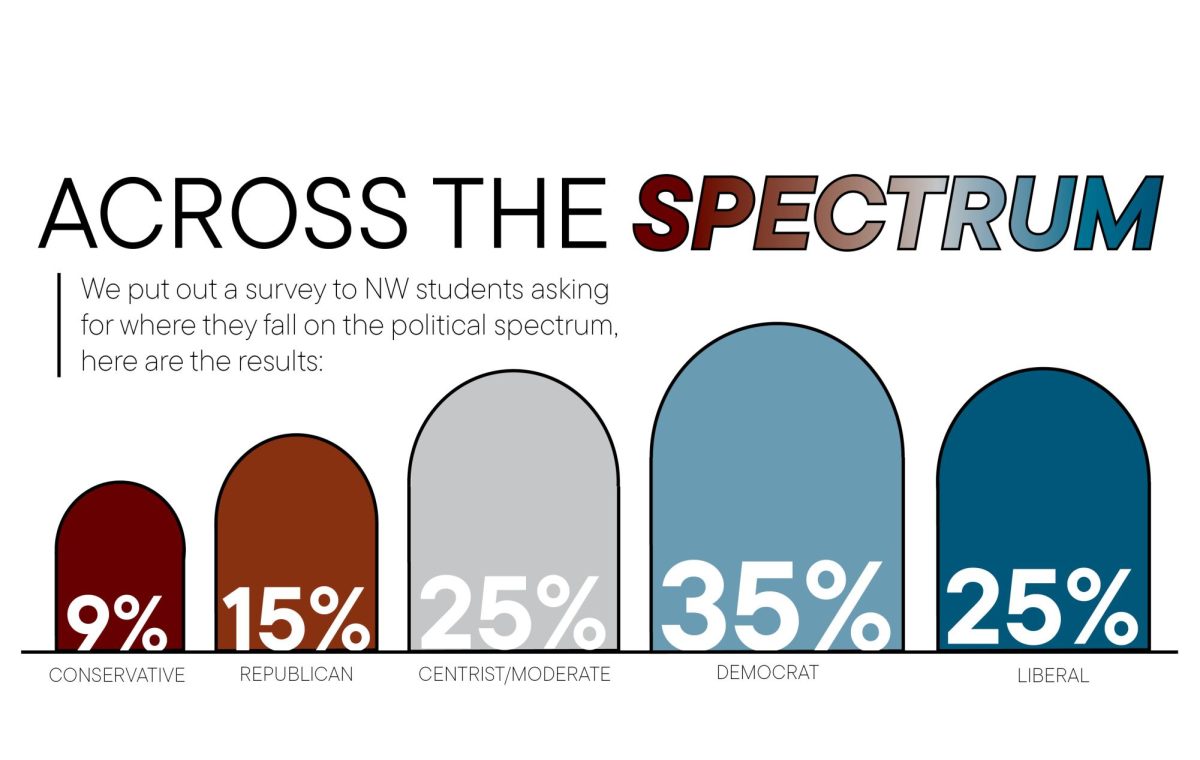
In 2025, the divide between Democrats and Republicans has been very prevalent within the political sphere. According to Gallup, a global analytics firm, the percentage of Americans identifying as moderate, or the middle ground, has decreased from an average of 43% to 34% in 2024, with Americans more likely to side strongly with liberal or conservative.
Because of this divide, fewer people feel comfortable sharing or talking about politics, including inside Shawnee Mission Northwest.
Some students feel it’s too risky to share their political opinions with peers, fearing judgment.
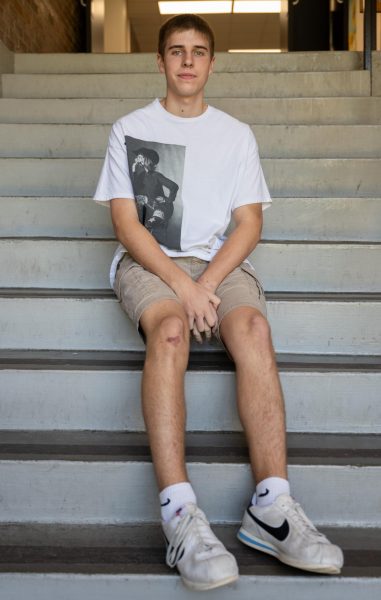
“No, I definitely don’t feel accepted, Sophomore Kylee Hook said, “I feel like if I talk about my beliefs, more people just aren’t going to agree with me.”
When asked to comment, several students declined, stating that they preferred not to share their political opinions publicly. Many students are worried about being judged by classmates who don’t share their views.
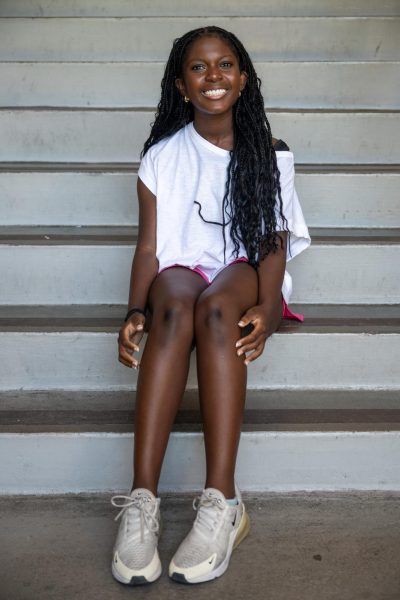
“I sometimes feel fear that if I truly say what I think, then people won’t see me the right way, or like see me the same way,” said sophomore Gus O’Mally.
According to Gallup, 57% of U.S. adults at some point avoided sharing their political views because of fear of harassment or poor treatment.
According to an Instagram poll done by the Northwest Passage, 39% of students don’t feel safe sharing their political views.
The United States has been split almost evenly down the middle between the two different political parties. According to the Pew Research Center, 49% of voters identify as democrats or lean towards democratic views, and 48% of voters identify as republicans or lean towards republican views.
According to Lily Mason in a podcast episode of On the Media, about 80% of Democrats and Republicans think the other party is a threat, with about 40% to 50% of those people thinking the other group is downright evil.
This judgment of each other’s political parties creates insecurity among students about sharing political views.
For some students, this insecurity stems from experience.
Last year, during lunch in the crowded cafeteria, sophomore Ren Conner sat at one of the long tables, eating a cheese pizza while conversations erupted over him. When the topic of U.S politics came up, Ren mentioned he did not agree with something – then someone at the table suddenly called Ren a slur regarding their sexuality.
That moment shook Ren.
“It felt like people were against me,” Conner said.
No one said anything to defend him. The lunchroom kept erupting with sound as if nothing had happened.
“I felt singled out,” Conner said, “like no one was standing up for me.”
Since then, Conner has been more hesitant to share his political opinions at school in fear it would happen again.
However, this political division does not just affect students.
History teacher Rebecca Anthony was the sponsor for Young Democrats from 2010 until last year, with her deciding to give up the position this year.
“I thought it was maybe time to pass the torch,” Anthony said, “My daughter is in 7th grade, and she’s going to be in a couple years, and I don’t want anyone giving her grief for something I do with a club.”
Even though students don’t feel safe sharing their political opinions, there are safe places for students to be able to share. Those places are Young Democrats and Young Republicans.
Young Democrats is the political club for democrats. Even though it is a democratic club, it is a club that is open to anyone.
“The main idea is that we have a safe environment for people to ask questions and to share what you’ve experienced,” Malaina Perry said. “You don’t have to be registered or specifically want to be a Democrat or liberal.”
The club attempts to help students develop political views and get students involved in politics. “We are hoping to have action steps where the students will be able to get involved very actively in the political system,” sponsor Brett Eichman said.
While Young Democrats provides a space for students with liberal viewpoints, its counterpart, Young Republicans, provides a space for young conservatives to discuss their views.
On a Friday morning, ten students sit around Todd Boren, the Young republican sponsor’s classroom, seven sitting by the door, two across the room. On the TV, there is a yellow slideshow with pictures of political figures, and information about immigration at the end, a question, reading, blah blah blah.
Where should I put the info below?
Young Republicans is the political club for republicans that meets in room 124 every other Friday morning. It is a space for conservative students to talk about current events and how they relate to the republican party’s beliefs, such as national news like the Charlie Kirk situation, to international issues like the military crackdown in Nepal. Their first meeting was on September 19th.
On a Friday morning, ten students sit around Todd Boren, the Young republican sponsor’s classroom, seven sitting by the door, two across the room. On the TV, there is a yellow slideshow with pictures of political figures, and information about immigration at the end, a question, reading, blah blah blah.
“Liberals expressed criticism over the immigrant deportations, which is why when Biden came into office, he offered healthcare to illegals who came into this country using taxpayer money, and that’s something the democrats don’t want to admit,” Casey Shannon says.
Young republicans meet in room 124 every other Friday morning. It is a space for conservative students to talk about current events and how they relate to the republican party’s beliefs, such as national news like the Charlie Kirk situation, to international issues like the military crackdown in Nepal.
Todd Boren gets up and starts explaining the differing political reactions between administrations when it comes to immigration policies
“I try to make sure, as a sponsor, that it’s not just focusing on what the conservative position is on key issues,” Boren said.
Last year, the number of people who attended young republicans averaged around six people. The most recent from the last two meetings, they’ve had 9-10 members attend despite there being 55 people in the young republican club GroupMe. Maybe democrat stats if we have them
At Northwest, political division doesn’t always show itself; instead, it lingers quietly, in conversations between friends, classroom debates, and meetings in clubs that struggle to gain momentum. Students feel the weight of this political tension, and many choose to stay quiet about their political views to avoid judgment and discomfort. As politics becomes more present in students’ lives, the division remains quieter and, in some ways, more difficult to address; finding a political common ground isn’t just a challenge, it is a conversation students are too scared to start.
“No, I definitely don’t feel accepted,” Sophomore Kylee Hook said, “I feel like if I talk about my beliefs, more people just aren’t going to agree with me.”